

House Hushing
How to Declutter, Organize, & Create a Calmer Home for the Season Ahead
There comes a point during every season when the house begins to feel a little too full.
Not necessarily dirty. Not even particularly messy.
Just… loud.
The coffee table has collected one too many decorative objects. The kitchen counters are holding appliances we rarely use. Extra blankets are spilling from baskets, unopened mail is gathering near the foor and the bedroom has slowly become home to everything we did not know where else to put.
Nothing is technically wrong, yet the entire house feels as though it is asking for a little room to breathe.
That is where House Hushing comes in.
House hushing is a gentle decluttering method that involves temporarily removing the nonessential items from a room, allowing the space to rest and then intentionally deciding what deserves to return.
The phrase was popularized by home stylist and author Myquillyn Smith, also known as The Nester, as a lighter more approachable way to rescue clutter without immediately forcing yourself to make dozens of permanent decisions.
Instead of standing in the middle of your living room debating whether every candle, vase, and decorative bowl should stay or go, you simply remove the extras for a little while.
You allow the room to become quiet.
Then you listen.
What is House Hushing?
Traditional decluttering usually asks us to make an immediate decision:
Keep it.
Donate it.
Sell it.
Throw it away.
House hushing gives you another option: remove it for now.
You temporarily take the nonessential objects out of a room and place them in a designated holding area. The furniture and necessities remain, but the decorative layers, unnecessary accessories and visual clutter are removed.
Once the room has been simplified, you clean it and live with the quieter version for a day or two. Many versions of the method recommend waiting approximately 24 to 48 hours before returning anything.
That pause is what makes house hushing feel different.
You are not deciding whether you will love an object forever. You are noticing whether the room feels better without it.
Why a Quieter Home Can Feel So Good
Our homes hold more than furniture.
They hold unfinished tasks, changing routines, old versions of ourselves and objects we once loved but may no longer notice.
Over time, even beautiful belongings can begin to compete for our attention. A room can be perfectly styled and still feel overstimulating.
House hushing allows you to experience the space before you begin organizing it.
You may discover that the side tables doesn’t need three framed photographs, a candle, a stack of books and a decorative bowl.
Perhaps the photograph and one small lamp are enough.
You may realize that the kitchen counter feels more peaceful when the rarely used appliances are stored away.
You may finally see that the bedroom chair was never the problem. It simply disappeared beneath clothing, tote bags and things waiting to be put somewhere else.
The goal is not to create an empty or impersonal home.
The goal is to make room for the things that help your home feel warm, useful and unmistakably yours.
Shop Wallpaperdirect.com
How to Hush Your House
You do not need to empty the entire house in one weekend.
In fact, please do not do this.
Choose one manageable room, one corner or even one surface. House hushing works best when it feels like a reset—not another overwhelming project we spiraled into.
Step One: Choose the Space That Currently Feels the Loudest
Begin with the room that has been bothering you lately. For me, most of the time, it’s my bedroom or closet.
It might be:
The living room where everyone drops their belongings
The kitchen counters that never seem completely clear
The bedroom that no longer feels restful
The dining room that has become a sstorage space
The entryway where shoes, bags and mail collect
For your first attempt, avoid beginning with a packed basement, garage or deeply cluttered storage area. A smaller, frequently used space will help you experience the benefit without becoming overstimulated.
Step Two: Create a Temporary Holding Area
Choose a place where the removed objects can stay for the next day or two.
This might be a guest room, folding table, section of the dining room or several labeled boxes.
The holding areas is not meant to become permanent storage. It is simply a waiting room for your belongings while you decide what the room actually needs.
Keep similar items together so the process does not become chaotic. Place books in one box, decorative objects in another and items that belong elsewhere in a separate basket.
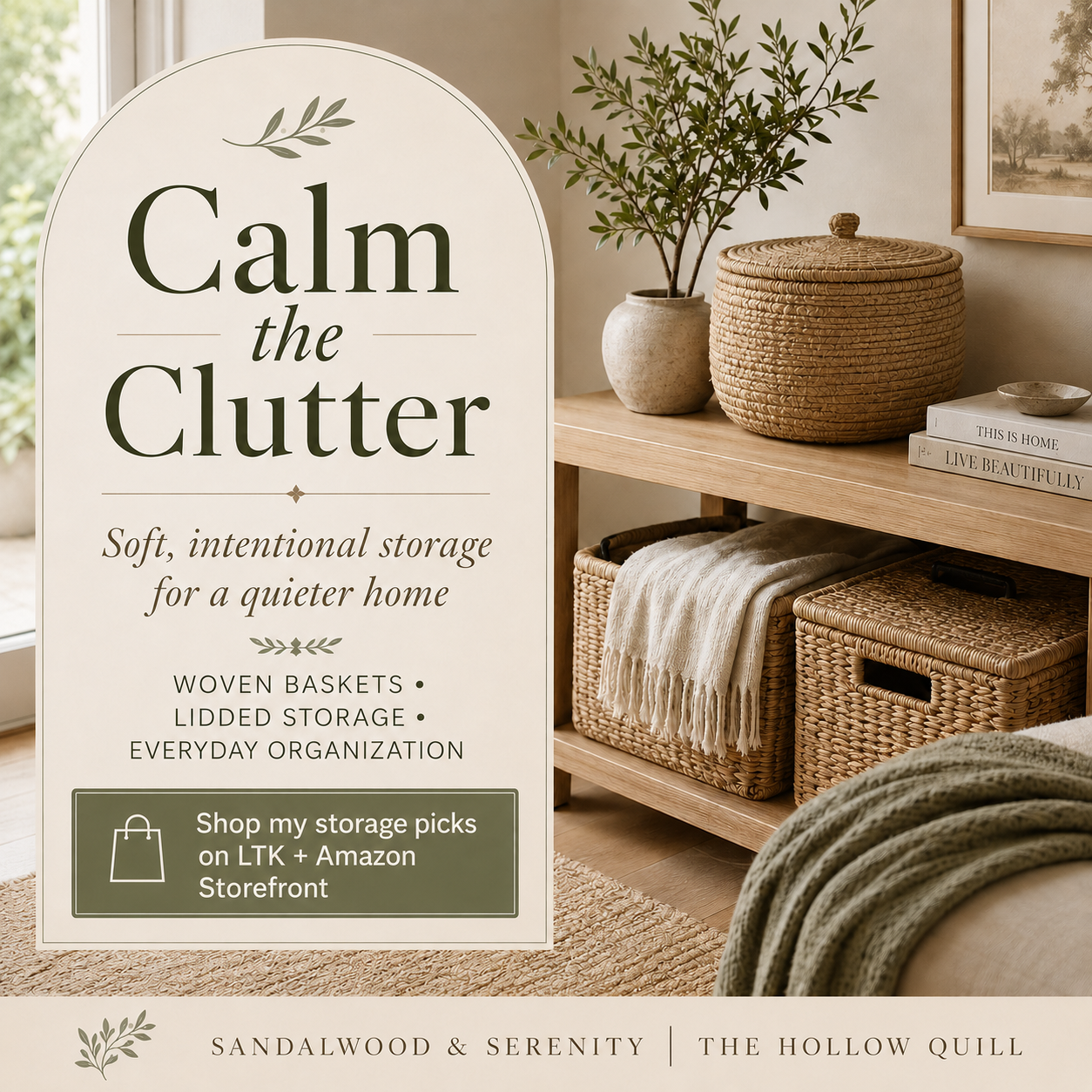
Create a calmer holding area with natural woven baskets that keep the house-hushing process organized without adding more visual noise.

Step Three: Remove the Nonessential Layers
Leave the large furniture and true necessities in place.
Then begin removing the smaller pieces:
Decorative pillows, extra blankets, tabletop accessories, candles, books, baskets, unused appliances, paperwork, seasonal décor and anything that has been sitting in the room simply because no one has moved it.
Do not overthink each object.
You are not getting rid of it yet. You are only allowing the room to exist without it.
As the surface become clearer, notice how the shape of the room begins to change.
Step Four: Clean the Empty Space
Once the room has been hushed, give it a proper cleaning.
Dust the surfaces that were previously covered. Vacuum beneath the furniture. Wipe the baseboards. Clean the windows and straighten anything that remains.
This part matters.
A quieter room feels even more refreshing when it is also clean. It allows you to see the space as it is rather than as a backdrop for everything you own.
Open a window if the weather allows. Let in the fresh air. Play something soft in the background or enjoy the rare absence of noise.
Step Five: Let the Room Rest
Try not to immediately decorate the room again.
Live with it for at least a full day.
Walk through it in the morning. Sit in it during the afternoon. Notice how it feels in the evening when the lamps are on.
Ask yourself:
Does the room feel lighter?
Is it easier to relax here?
Which objects do I genuinely miss?
What function does the room need to support during the next season?
This quiet period helps separate the things you love from the things you have simply become accustomed to seeing.
Step Six: Return Items Slowly and Intentionally
When you are ready, begin returning items one at a time.
Start with what the room truly needs to function. Then add the pieces that provide warmth, comfort or meaning.
A lamp may return becaus the room needs softer evening light.
A framed photograph may return because seeing it make you smile.
A basket may return because it give the family a practical place to store blankets.
A decorative object should not return simply because there is an empty spot available.
After placing each item, step back and look at the room again. Stop before the surfaces feel full.
You may be surprised by house little the room actually feels.
What Happens to Everything That Does Not Return?
Once you have chosen what belongs in the room, sort the remaining items into four simple categories.
Relocate
Some objects are useful belonging somewhere else.
Return the coffee mugs to the kitchen, the shoes to the closet and the paperwork to the office. Give each item a home near the place where it is actually used.
Store Seasonally
Heavy throws, holiday décor and off-season accessories can be cleaned, labeled and stored until they are needed again.
Seasonal storage should feel intentional—not like a place where forgotten items disappear indefinitely.
Donate or Sell
Items that are still useful but no longer support your home can be passed along.
Place donations directly into a bag or box and move them near the door or into the car. The sooner they leave the house, the less likely they are to wander back into the room.
Let Go
Broken, expired or unusable items do not need another organizational system. They need to leave.
Release them without guilt. Keeping something you cannot use does not make the original purchase more worthwhile.
A Gentle Room-by-Room
The Living Room
Remove excess pillows, extra throws, tabletop décor, old magazines and anything that has accumulated on the floor.
Return only the pieces that make the room more comfortable or help it function. Leave breathing room on coffee tables and side tables rather than filling every available surface.
A lamp, one small stack of books and a meaningful object may be all the styling a table needs.
The Bedroom
Begin with the nightstands, dresser and infamous clothing chair.
Remove unfinished books, empty glasses, extra beauty products, paperwork and décor that no longer feels restful.
When rebuilding the room, prioritize what supports your evening and morning routines: soft lighting, a water glass, your current book, a small dish for jewelry and perhaps one calming decorative element.
The bedroom does not need to hold everything you own. It only needs to help you begin and end the day peacefully.
The Kitchen
Clear the counters of appliances, containers and utensils that are not used regularly.
Place rarely used appliances in a cabinet or pantry for a trial period. You can always return them if reaching for them becomes inconvenient.
Keep the items connected to your real routines—not the imaginary version of yourself who makes fresh pasta every Tuesday and bakes bread before breakfast.
The Dining Room
Remove anything unrelated to dining, gathering or enjoying the room.
The dining table often becomes the temporary home for mail, shopping bags, projects and unopened packages. Give those items proper destinations before returning anything decorative.
A simple centerpiece, bowl of fruit or vase of season branches may be enough.
The Entryway
The entrance to your home establishes the mood before you reach any other room.
Remove out-of-season shoes, extra coats, old mail and bags without a designated home.
Return only what you regularly need as you leave the house. A tray for keys, basket for dog-walking essentials and a small lamp can make the space feel both functional and welcoming.
House Hushing w/out Becoming a Minimalist
A calm home does NOT have to be beige, empty or perfectly styled.
You can love pattern, color, collected treasures, vintage furniture and shelves filled with books while still creating a visual breathing room.
House hushing is not about following someone else’s definition of minimalism.
It is about discovering your own threshold.
Some people feel peaceful with nearly empty surfaces. Others feel happiest surrounded by art, photographs and meaningful collections.
The goal is to remove everything temporarily so you can better recognize the difference between a home that feels layered and a home that feels crowded.
Your version of calm may still be colorful.
Your version of organized may still look lived in.
Your home should reflect the people inside it — not an image saved from someone else’s social media feed.
A Few House-Hushing Mistakes to Avoid
Do not hush every room simultaneously. You still need to live in your home while completing the process.
Do not purchase organizing containers before deciding what you are keeping. A beautiful basket filled with unnecessary belongings is still clutter.
Do not rush rush to refill empty surface. Empty space is not unfinished. It gives the pieces you love room to be noticed.
Most importantly, do not turn this into another opportunity to criticize yourself.
Your home became full because life happened inside it.
People ate meals, opened packages, brought home new interests, moved through difficult seasons and changed their routines. House hushing is not a punishment for allowing clutter to gather.
It is simply a way to gently recalibrate.
Preparing Your Home for the Season Ahead
Once the room has been hushed and thoughtfully rebuilt, add a few subtle seasonal touches.
Replace a heavy throw with a lighter layer or bring a cozier blanket out of storage as the temperature changes. Rotate the books on the coffee table. Change the branches or flowers in a favorite vase. Adjust the lighting so evenings feel softer.
You do not need an entirely new collection of décor every season.
Often, the most effective seasonal refresh comes from removing more than you add.
The house begins to feel different because you can see it again.
Let the House Exhale
A peaceful home is not a home that remains perfectly organized every hour of the day.
It is a home that can recover.
It has places for the things you use, room for the people you love and enough breathing space to support the season you are currently living through.
House hushing gives us permission to pause before organizing purchasing or decorating again.
Remove the excess.
Clean what remains.
Live with the quiet.
Then return only what helps the room feel warmer, calmer and more like home.
Sometimes creating a softer place to land does not require adding anything at all.
Sometimes the house simply needs to exhale.
Until Next Time…
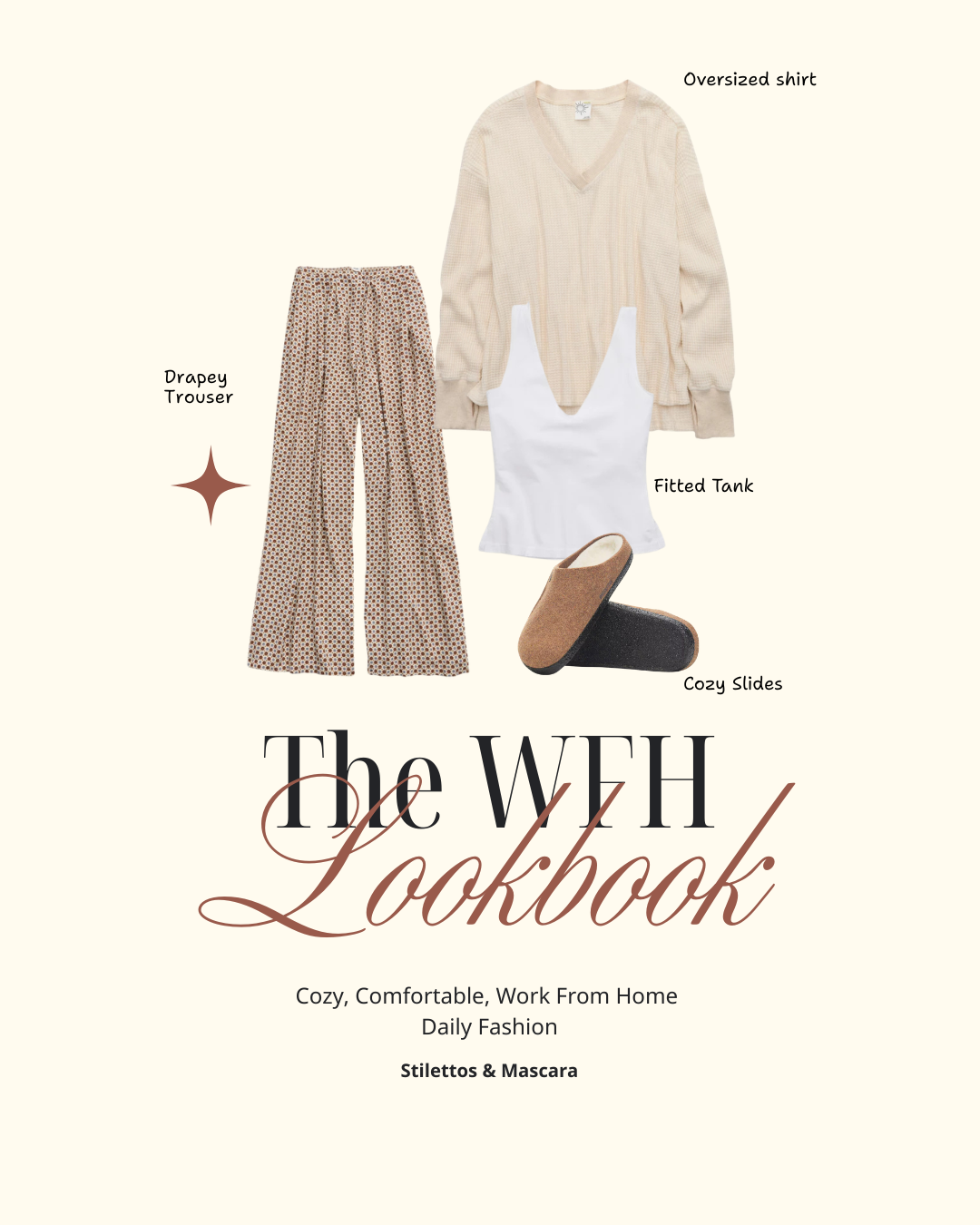
Your office may be at home, but your style doesn't have to stay in pajamas.
Shop today's cozy WFH edit and discover more comfortable fashion.

Hi, I'm E. Lynn Jimenez, founder of The Hollow Quill and the voice behind Sandalwood & Serenity. I believe a beautiful home isn't about perfection—it's about creating spaces that help you slow down, breathe a little deeper, and find comfort in the everyday. From cozy seasonal décor to simple home refreshes, I'm sharing inspiration to help you create a home you truly love coming back to.
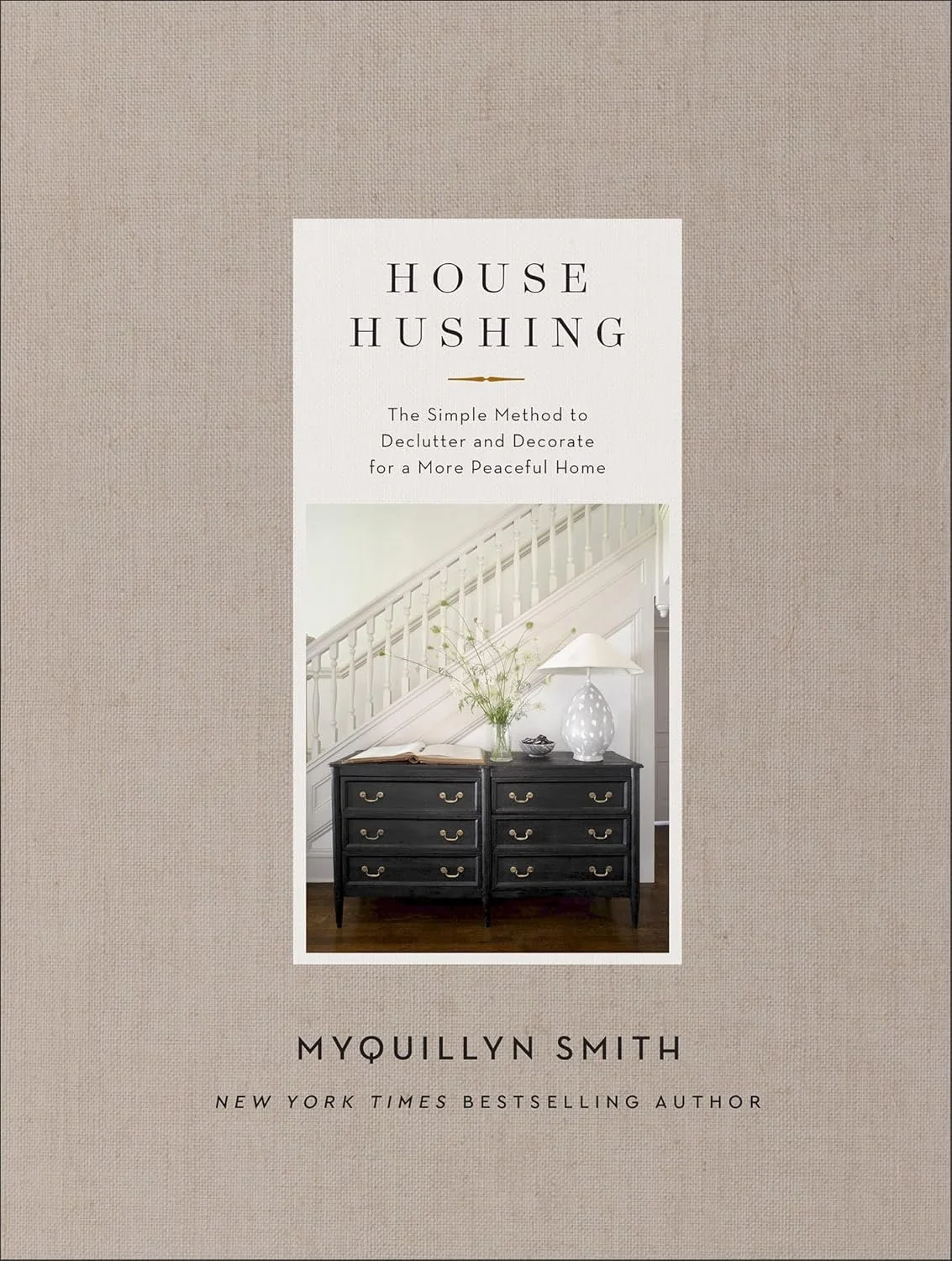
If you're looking to make your home more peaceful, check out this book!
Explore Sandalwood & Serenity - The cozy home and living corner of The Hollow Quill 🌱


Explore Flora & Fauna | The Hollow Quill’s Women’s Wellness Corner of the Internet



Carry a little piece of The Hollow Quill with you. 🖤✒️
From errands and farmers market mornings to books, laptops and everything life asks us to carry, this classic The Hollow Quill tote was made for the stories still being written.
Shop The Hollow Quill merch and find your new everyday favorite. →






Cozy season is calling, and so are the sales! 🍂 This week's Home Deals & Steals features beautiful fall décor, affordable home upgrades, and early holiday hosting essentials from Crate & Barrel, Anthropologie Home, Target, Amazon, and Wayfair. From cozy textures to stylish little luxuries, discover how to refresh your space without paying full price. Because a beautiful home shouldn't come with a scary price tag!